
 Back to Travel Notebook
 Noctourism – Night-Seeing Experiences That Are Lighting Up Travel
There’s a new trend in travel: the search for darkness. The world as we know it by day looks, sounds, and feels different under the cover of night. From inviting us to tune in to the call of animals that come out in the dark, to inspiring us to look up at the dancing aurora australis in the Southern Hemisphere, nocturism is having a moment.
Stargazing has a unique way of connecting us to the cosmos, grounding us in wonder while heightening our sense of adventure. Across the globe, dark sky reserves provide exceptional places to experience celestial beauty, away from the distractions of artificial light.
Recent developments have spotlighted the importance of conserving night skies in preserving natural ecosystems and offering a serene retreat for travelers seeking to reconnect with nature. Taking these preservation efforts to heart, travelers are now treated to exceptional night-sky views in parks like Landes de Gascogne, the sixth International Dark Sky Reserve in France, Kwessi Dunes in Namibia, and Ramon Crater in Israel’s Negev Desert. Visits here not only promise unobstructed views of thousands of stars but also open doors to a deeper understanding of the vital role darkness plays in the environment.
Beyond merely looking up, learn about the special tours, events, and activities designed to make your clients’ nocturnal experiences truly unforgettable. Whether exploring solo, with family, or as part of a group, they’ll uncover opportunities to connect with the natural world and the stories it tells through the stars.
Come with us on a tour of the heavens with Rebecca Recommends partners who are illuminating the darkness. Prepare to be whisked away into a world where the night sky takes center stage, and the stars write their own story across the heavens.
Découvertes – Discover the Stars: Stargazing in Landes de Gascogne Regional Natural Park
Recently named the sixth International Dark Sky Reserve in France, this stunning lowland park in Nouvelle-Aquitaine offers some of the clearest night skies in the country. Here’s everything you need to know to plan your clients’ starry adventure in Landes de Gascogne.
Top Stargazing Spots and Best Viewing Times
The Landes de Gascogne Regional Natural Park spans over 1,158 square miles across the Gironde, Landes, and Lot-et-Garonne departments, making it a vast playground for stargazers. The park’s core area, covering 365 square miles at the heart of the Landes de Gascogne pine forest, is where visitors find the darkest skies, perfect for spotting up to 4,000 stars with the naked eye.
This area, at 475 feet above sea level, sits at the head of three watersheds—the Leyre, the Midouze, and the Ciron—offering unobstructed views of the night sky.
For the best experience, point your clients to spots like the Arcachon Basin or the southern Grande Lande, where light pollution is minimal. The park’s night sky quality averages between 21.2 and 21.9 magnitudes per square arcsecond—a scientific measure that, more simply, means the stars here are incredibly bright and clear.
The best time to stargaze is during the cooler months, from late fall to early spring (November to March), when the air is crisp, humidity is low, and nights are longer. Summer months (June to August) are also great, especially for events, though your travelers might encounter more visitors. Aim for nights with a new moon for the darkest skies and check local weather forecasts to ensure clear conditions.
Special Tours, Events, and Experiences
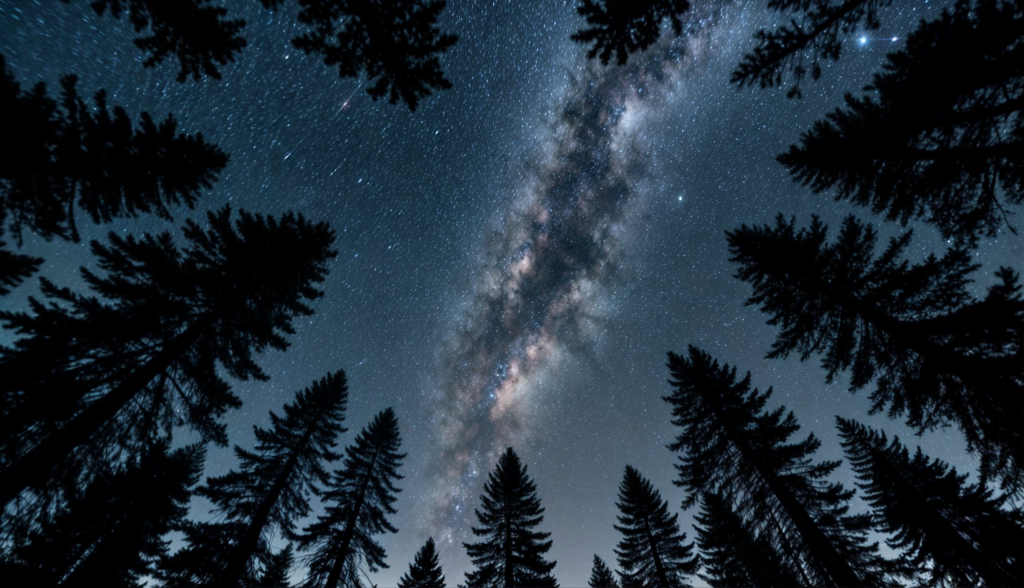
Landes de Gascogne isn’t just a place to look up, it’s a place to immerse oneself in the wonder of the night sky. The park partners with local astronomy clubs to host a variety of events that bring the stars to life.
One highlight is the Night of the Stars, an annual event where guests can join amateur astronomers for telescope viewing, constellation tours, and talks about the cosmos. Another favorite is the Day of the Night, which focuses on raising awareness about light pollution through guided night walks and stargazing sessions.
For a more immersive experience, the park organizes Forest Nights, where one can explore the nocturnal biodiversity of the Landes de Gascogne pine forest while stargazing. These guided hikes allow one to hear the sounds of the forest at night—think owls and rustling wildlife—while gazing at the Milky Way above.
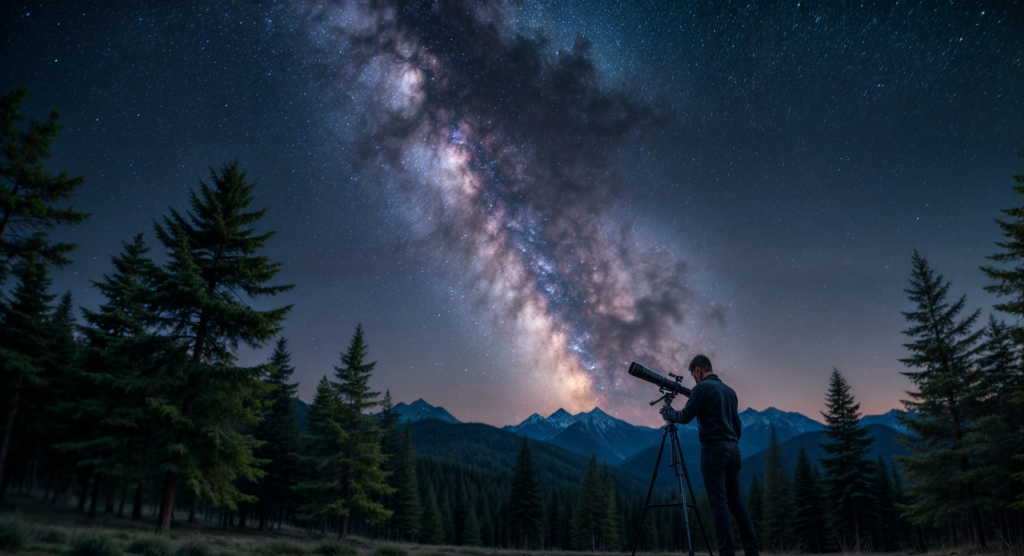
The park also supports educational initiatives for schools, so if your clients are traveling with kids, they can join in on fun astronomy activities tailored just for them.
While there aren’t permanent observatories within the park itself, the nearby Arcachon Basin and Val de l’Eyre communities often host pop-up telescope events. Découvertes DMC France can arrange private stargazing experiences for groups, complete with a local expert to guide visitors through the constellations and share stories of the night sky. They can also connect your clients with photographers who specialize in astrophotography to help them snap stunning shots of the stars.
Plan Your Clients’ Stargazing Journey – Découvertes DMC France can make a stargazing trip to Landes de Gascogne effortless and magical. They can arrange everything—from private transfers to the park’s darkest spots to guided night hikes and astronomy events. Pair a stargazing adventure with a stay in a cozy, eco-friendly lodge in the pine forest, where guests can fall asleep under a blanket of stars.
Make your clients’ journey to the stars one they’ll never forget!
Exeter Safaris Company – Stellar Stargazing Featuring Kwessi Dunes
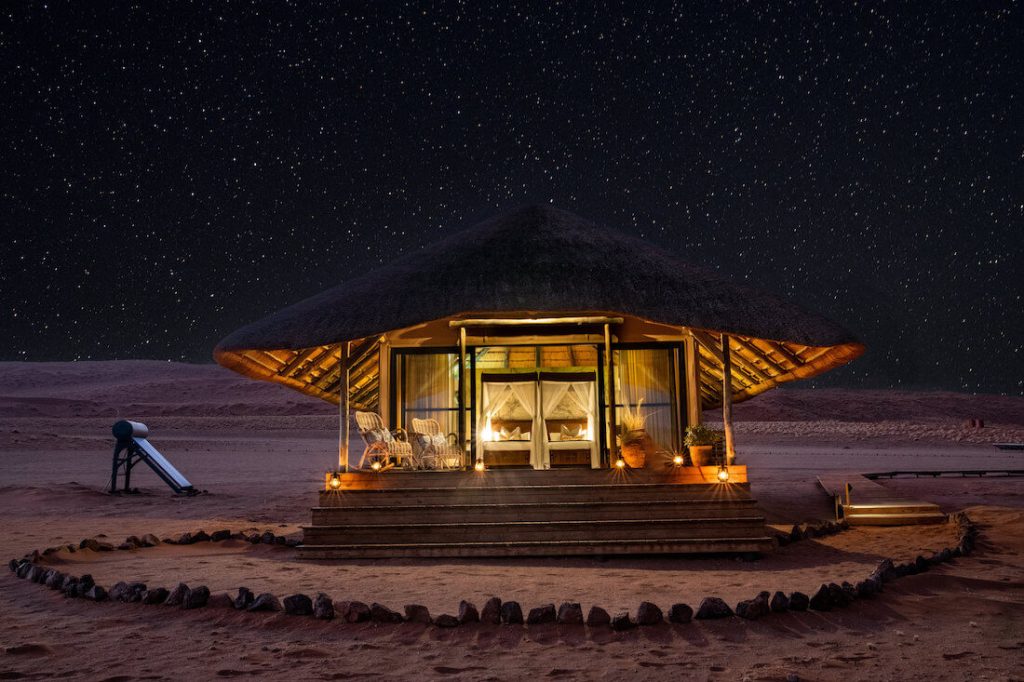 NamibRand Nature Reserve guest bedroom. Photo credit – Kwessi Dunes
Kwessi Dunes is nestled within the vast NamibRand Nature Reserve in Namibia, home to Africa’s first designated International Dark Sky Reserve at the Gold Tier level. This esteemed certification recognizes areas that maintain exceptional night sky quality through effective light pollution reduction and efforts to preserve natural nocturnal environments.
Each chalet at Kwessi Dunes boasts a private “stargazer” room, offering an unobstructed view of the stunning night sky, allowing guests to fully immerse themselves in the reserve’s remarkable dark sky status. Panoramic desert vistas extend from the rooms, the main area, and the swimming pool. When they’re ready to shift their gaze, guests can enjoy thrilling activities such as quad biking, scenic drives, hot air ballooning, helicopter flights, horse riding, and day trips to Sossusvlei.
In the evenings, guests indulge in personalized, private stargazing tours led by expert astronomers. With one of the world’s clearest skies as their backdrop, they can explore the celestial wonders above from the comfort of their “star gazer” room or outdoor viewing areas. The vast desert landscape offers the perfect setting to witness the awe-inspiring beauty of the stars, planets, and constellations. Namibia truly offers the ultimate vantage point for experiencing the night sky’s mesmerizing celestial performance.
Dream Escape – A Star-Studded Scotland Stay
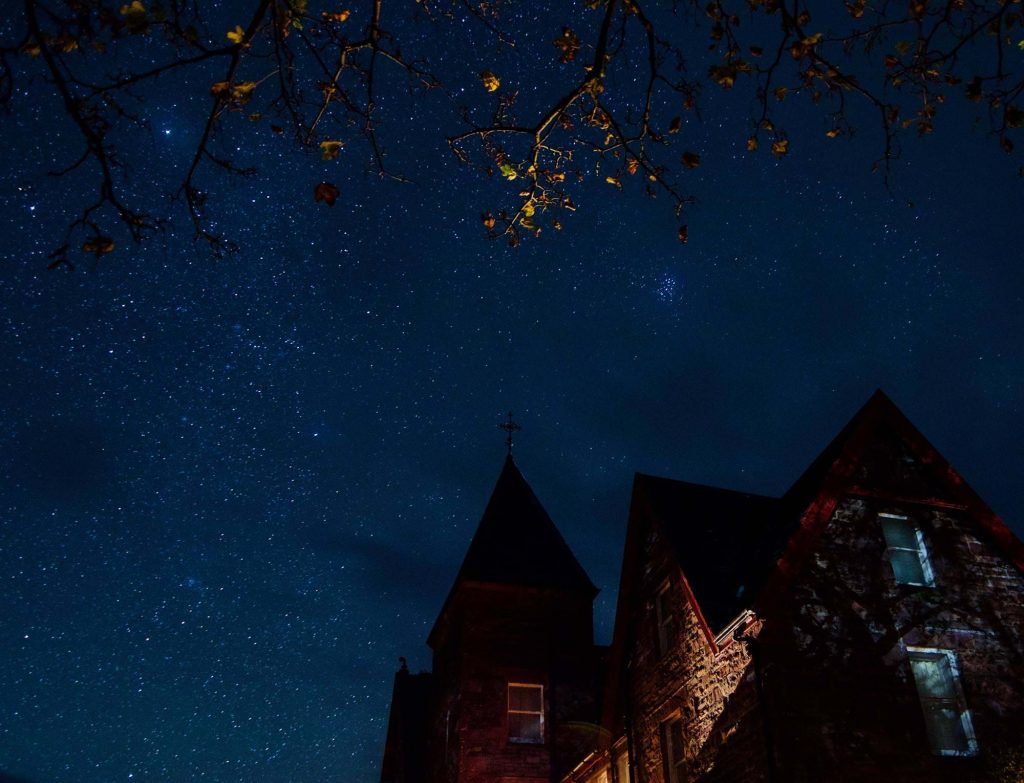
Combining world-class luxury, a plethora of exhilarating activities, and one of the most spectacular settings in Scotland, The Torridon is the UK’s most northerly five-star hotel.
The resort also provides the most spectacular setting for a range of thrilling outdoor pursuits. Thanks to the onsite outdoors center, Dream Escape guests can embark on guided walks and hikes, e-biking, mountain biking, gorge scrambling, and more. Archery and clay pigeon shooting sessions take place at the end of the lawn, with stunning views of the loch and mountains beyond.
As night falls, enchanting stargazing experiences can be organized on the terrace. Guided by an astronomer, Dream Escape guests can learn all about the night sky and stars, and how to stargaze. Thanks to its remote location, The Torridon is amongst the darkest locations on Earth, making awe-inspiring views of the Milky Way and thousands of stars possible. The wilderness surrounding The Torridon is a Class 1 or 2 location on the Bortle Scale, the official dark-sky classification.
Dinaric Adventures – Mediterranean Nights: Croatia’s Stunning Celestial Landscapes
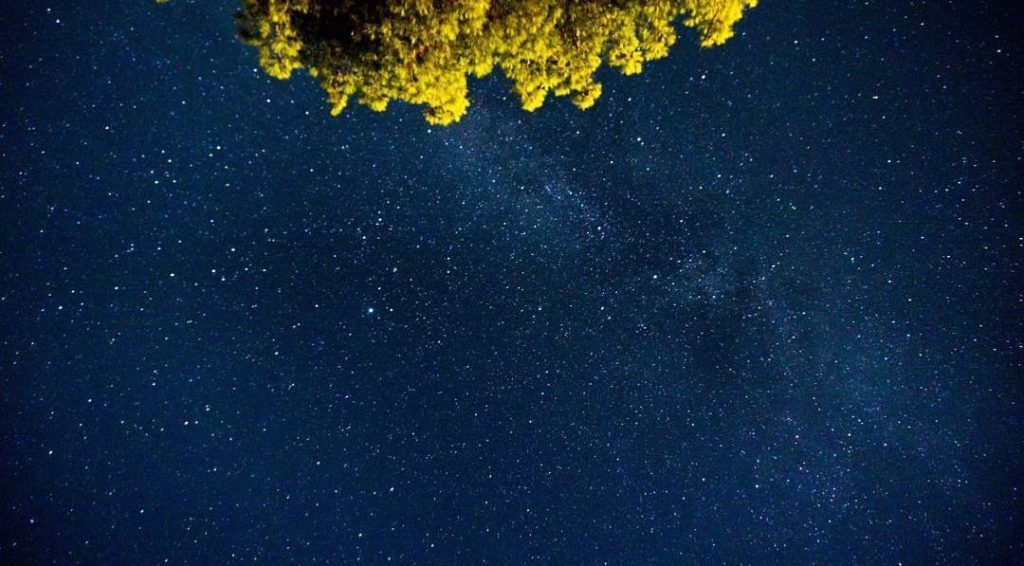 Lastovo, known as the “Island of Stars,” boasts an exceptionally clear night sky,
offering stunning views of the Milky Way and vivid constellations.
Known for its craggy coastline with around 1,000 islands, Croatia attracts locals and tourists seeking dark, starry night skies. But Lastovo, one of the country’s island gems, is different—remote, a five-hour ferry ride from Split, and near the Montenegrin border. With few inhabitants, it feels like its own little world, floating in time. Locals say, “You need a special kind of mind for Lastovo.”
A nature park covered mainly in forest, Lastovo is famous for its pristine night skies and for inspiring Croatian acapella songs, now protected as cultural heritage. Many marriage proposals happen under its dazzling stars, accompanied only by the sound of waves and the whisper of the wind.
Every August, Trogir—a picturesque town with Romanesque and Renaissance streets—celebrates the “Tears of St. Lawrence.” According to legend, the falling stars visible in early August represent the saint’s tears, symbolizing good triumphing over evil. Trogir’s St. Lawrence Cathedral is one of Croatia’s finest, its bell tower reaching toward infinity.
Other great stargazing spots include Plitvice Lakes, Kornati National Park, and Petrova Gora, but nothing beats Croatia’s islands and coastlines—the salty air, the scents of native plants, the hum of cicadas, and the sound of the sea create an unforgettable Mediterranean dream.
TRAVEX – Israel’s Top Stargazing Spots and Best Viewing Times
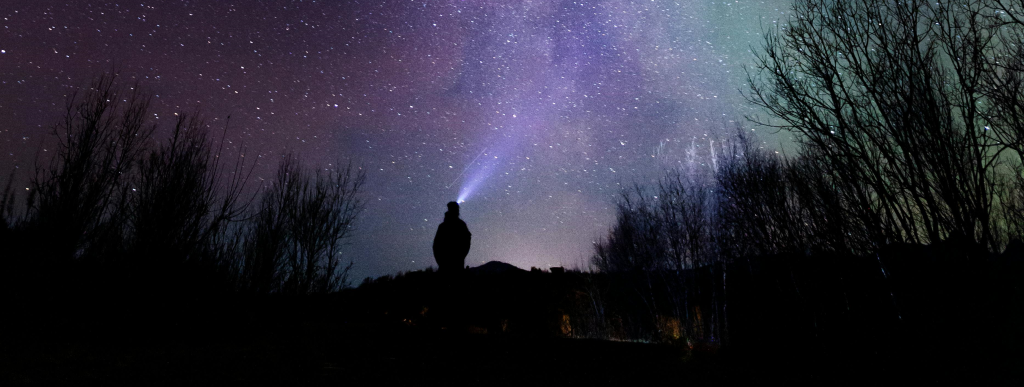
Israel’s Negev and Arava deserts offer some of the best stargazing in the Middle East, with minimal light pollution, dramatic landscapes, and dry, clear skies. The best time for stargazing in Israel is from October to May, when the skies are clearest, and temperatures are comfortable for night outings.
- Makhtesh Ramon (Ramon Crater) – Located in the heart of the Negev Desert, this UNESCO-recognized biosphere reserve is Israel’s official Dark Sky Park. The crater’s unique geological setting offers panoramic views and exceptional night clarity. Nearby Mitzpe Ramon has guided astronomy tours with high-powered telescopes, often paired with local wine and desert hospitality.
- Timna Park – Just north of Eilat, Timna’s surreal rock formations and expansive valley offer a stunning setting for night sky photography and quiet celestial contemplation. Winter months (December–February) provide crisp skies and cool evenings.
- Mount Bental and the Golan Heights – For travelers exploring northern Israel, the Golan offers elevated, remote vantage points far from city lights. Summer months (June–August) are ideal, especially for viewing meteor showers like the Perseids.
- Arava Valley and Kibbutz Lotan – Known for its eco-tourism, this remote region near the Jordanian border combines stargazing with sustainable hospitality. Clear desert nights and a serene atmosphere make this a favorite among astronomy enthusiasts.
Insider Tip – For an unforgettable experience, book a private stargazing session for your clients with an expert astronomer in Mitzpe Ramon. Local guides like Ishay Shavit or AstroDesert offer personalized tours complete with telescopes, mythological storytelling, and Bedouin-style tea under the stars. Time the visit around a new moon for the darkest skies—and if they’re visiting in August, don’t miss the Perseid meteor shower, when shooting stars streak across the Negev sky.
Special Tours, Events, or Experiences
Israel’s stargazing experiences go far beyond the telescope. The country’s desert terrain has inspired a range of immersive night adventures, combining science, history, and spiritual awe.
AstroDesert Stargazing Tours (Mitzpe Ramon) – A favorite among travelers and locals alike, these expert-led sessions take place just outside the town of Mitzpe Ramon. Using powerful telescopes and green laser pointers, guides offer engaging explanations of constellations, deep-sky objects, and even celestial mythology. Tours are available in English and are perfect for couples, families, or small groups.
Night Hikes in the Ramon Crater – Guided by moonlight and starlight, these hikes offer a rare chance to walk through one of the world’s most striking erosion craters in complete silence. Naturalist guides point out nocturnal wildlife and share Bedouin legends about the stars.
Timna by Night – Full Moon Desert Tours – Timna Park hosts occasional guided moonlight walks and stargazing events amid its surreal sandstone formations. During these evenings, the ancient copper mines and giant natural arches are illuminated only by moonlight—an unforgettable experience.
Golan Heights Astronomy Camps – During the summer months, astronomy clubs and eco-lodges in the Golan host overnight stargazing retreats, often timed with celestial events like meteor showers or lunar eclipses. These retreats offer telescope access, astrophotography workshops, and a cozy, communal vibe.
Solar and Astronomical Center (Givatayim Observatory) – While not in a remote area, this urban observatory near Tel Aviv offers a different kind of experience, ideal for travelers passing through the center of the country. Check their calendar for public telescope nights and planetarium shows.
Dark Sky Certifications and Initiatives
In 2017, Makhtesh Ramon (Ramon Crater) was designated the first International Dark Sky Park in the Middle East by the International Dark-Sky Association (IDA). This certification recognizes the region’s exceptionally dark skies and the local commitment to reducing light pollution. The Israeli Nature and Parks Authority has implemented specific lighting guidelines in and around Mitzpe Ramon to protect the night environment, and ongoing initiatives aim to expand dark-sky-friendly practices throughout the Negev Desert. Visitors benefit from pristine stargazing conditions while supporting a growing movement for celestial conservation in the region.
Dark-Sky Friendly Lodging and Eco-Tourism Experiences
- Six Senses Shaharut – Nestled in the Arava Valley, Six Senses Shaharut is a luxury resort emphasizing sustainability and wellness. Designed to blend seamlessly with the desert landscape, the resort utilizes energy-efficient systems and minimizes light pollution, providing guests with unparalleled night sky views.
- Isrotel Beresheet – Perched on the edge of the Ramon Crater in Mitzpe Ramon, Isrotel Beresheet combines luxury with nature in a truly iconic setting. The hotel’s low-profile architecture and warm, ambient lighting are designed to complement the surrounding desert landscape without disrupting its natural darkness. Guests can enjoy stargazing right from their private balcony or poolside, with the vast, unpolluted Negev skies stretching overhead—ideal for a tranquil, upscale celestial experience.
These establishments not only provide comfortable lodging but also contribute to preserving Israel’s dark skies, allowing guests to fully appreciate the desert’s celestial displays.
Southern Crossings – Enjoy Amazing Stargazing in Australia and New Zealand
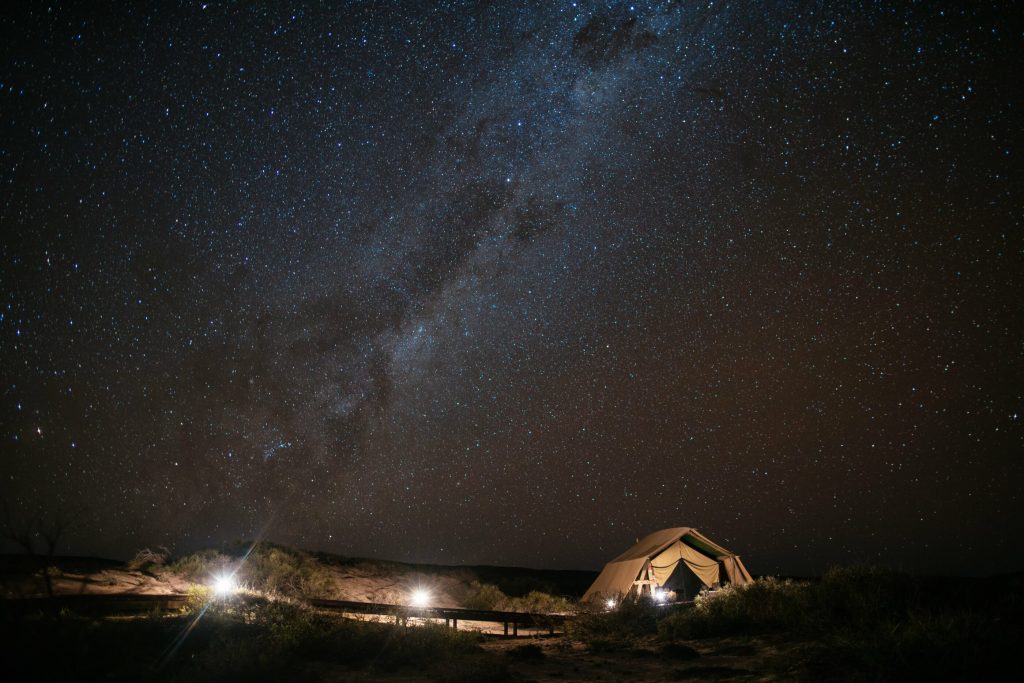 Sal Salis stargazing, Australia
Australia and New Zealand’s wide-open spaces and countless opportunities to get away from bright city lights give rise to some spectacular Southern skies stargazing. See constellations and celestial wonders not visible from the Northern Hemisphere and learn the local legends woven around them.
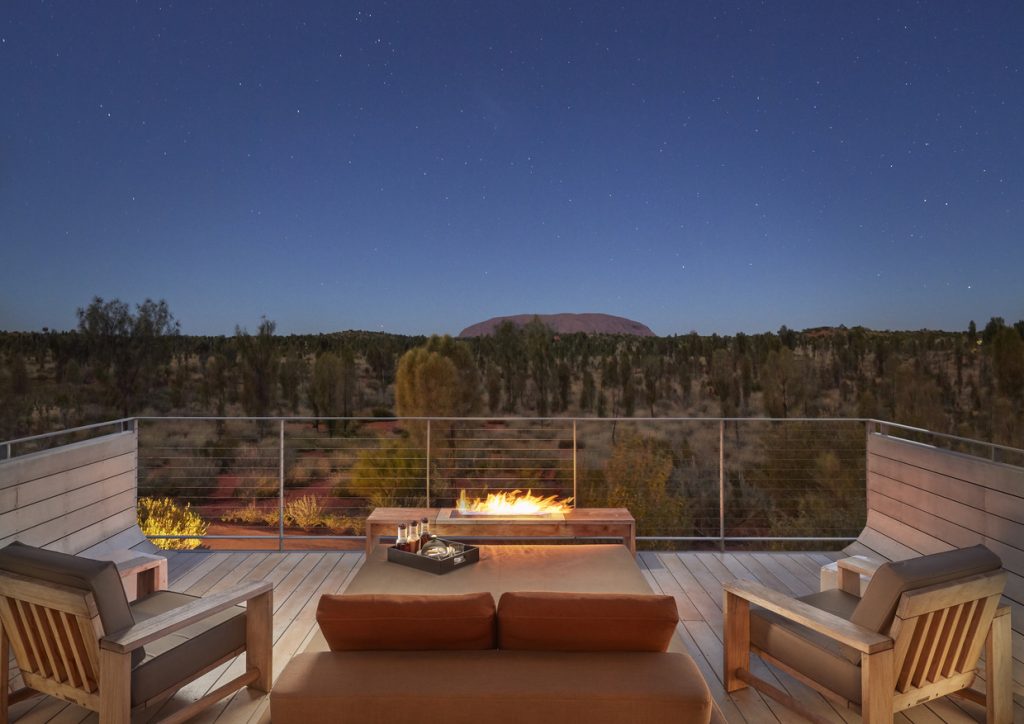 Longitude 131 Uluru balcony view. Photo credit – Longitude 131
Whether cruising Western Australia’s Kimberley Coast, snuggling up under a swag in the heart of Australia’s Red Centre, or gazing up at the Southern skies from a luxury lodge on the edge of Tasmania, Australia offers a collection of spectacular stargazing opportunities.
Western Australia’s northwest coast is almost as far from any city lights as one can get—send your clients on a small-group luxury expedition-style cruise of the Kimberley or set them up for hammock naps on the balcony of their Sal Salis eco-wilderness safari “tent” on the Ningaloo Coast to discover the most spectacular natural wonders under the sea and in the skies.
In Australia’s spiritual heart, Longitude 131 is the perfect base to enjoy a rolling display of spectacular color; from a champagne sunset over Uluru and a dune-top dinner under the stars, to uninterrupted views of the star-filled outback skies (where the Milky Way’s dusty band stretches across each horizon) enjoyed from the deluxe swag on the balcony of one’s private pavilion — all the way through to the captivating change of colors over Australia’s famous monolith as the night stars slowly give way to sunrise.
Southern Crossings’ Travel Designers can introduce your clients to the engaging locals who can share the captivating Aboriginal creation tales written in the night skies with private stargazing experiences across the country.
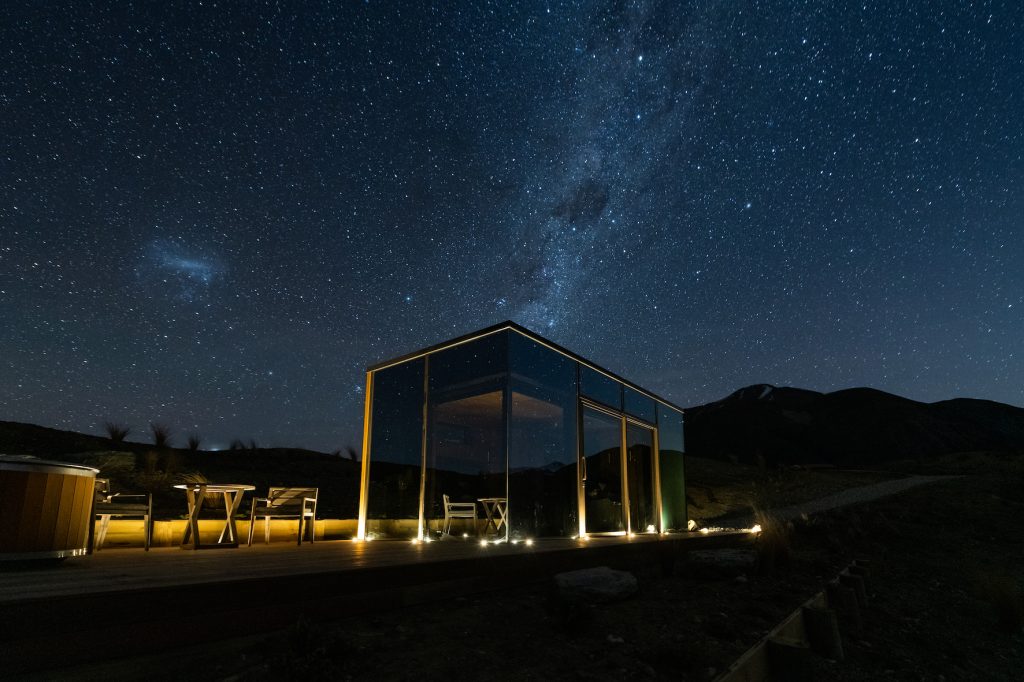 Lindis Pods on a starlit night. Photo credit – Lindis Pods
New Zealand’s darkest skies shine the brightest, leaving keen stargazers spoiled for choice from Great Barrier Island to Stewart Island.
In the Ahuriri Valley, bordering one of the largest International Dark Sky Reserves on the planet (Aoraki Mackenzie), New Zealand’s Lindis luxury lodge and pods offer some of the best stargazing in the Southern Hemisphere. Your travelers can slip into a hot tub under the stars to simply marvel at the twinkling night sky, glass of sparkling in hand—or join one of their private guides who can point out Southern skies’ star clusters and constellations, including those visible to the naked eye – and with the use of the lodge’s telescope.
Alternatively, your clients can cruise to the most remote reaches of New Zealand’s fabulous Fiordland or heli to the secluded mountain-top Minaret Station to enjoy star-studded nights and the opportunity to see the spectacular dancing Southern Lights (aurora australis), best viewed during the cool, clear Southern Hemisphere winter nights.
Stargazers in New Zealand at this time of year can also join in the Maori New Year celebrations (June 20, 2025). The rising of the bright Matariki star cluster, which takes place in the mid-winter months, and is best viewed in the early morning just before dawn, heralds the Māori New Year – a time to reflect on the past year, celebrate the present, plan for the year ahead – and marvel at the twinkling night skies.
Also – as a side note …
Those who are captivated by the skies will also be keen to note that Australia and New Zealand are in the path of totality for the solar eclipse—July 22, 2028—that passes directly over Western Australia’s Kimberley region and across New South Wales (from Mudgee to the Blue Mountains), over Sydney and across the Tasman over Queenstown and Dunedin—some of the best destinations for spectacular stargazing, too.
Patamar Select – A Deeper Connection to Alentejo, Both Earthly and Cosmic
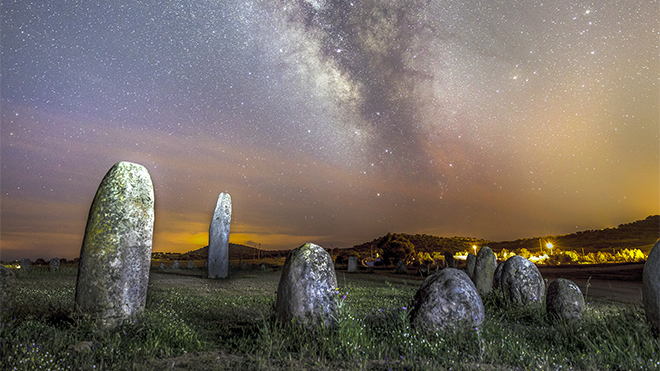 The Alqueva Dark Sky Route. Photo credit – VisitPortugal
Explore Alentejo’s natural beauty and night skies through a sustainable lens with an exclusive stargazing experience led by Miguel Claro, a NASA-affiliated astrophotographer. Set in the Alqueva Dark Sky Reserve, one of the world’s first starlight tourism destinations, this adventure highlights the importance of preserving natural darkness while offering an unparalleled view of the cosmos.
Set your clients up with a stay at Convento do Espinheiro, a 15th-century convent-turned-eco-luxury hotel near Évora. Committed to sustainability, the hotel runs on renewable energy, minimizes waste, and sources ingredients for its restaurant from local organic farms. The on-site spa embraces nature-based wellness, using olive oil, regional herbs, and wine extracts in its treatments. Surrounded by ancient cork oak forests and rolling vineyards, the property showcases Alentejo’s unspoiled landscapes.
Your clients’ stay will include a visit to Esporão, a leader in sustainable winemaking in Portugal. The winery prioritizes biodiversity, regenerative agriculture, and minimal intervention production, crafting organic wines that reflect the region’s unique terroir. They’ll enjoy a Michelin-starred meal, where every ingredient is sourced from local farms or Esporão’s own organic gardens. Expect fire-roasted vegetables, pasture-raised meats, and artisanal cheeses, paired with expressive, low-impact wines.
At night, they’ll venture into the protected skies of Alqueva for a guided stargazing session with Miguel. They’ll learn about the science of light pollution and its effects on ecosystems, then observe distant galaxies and constellations through high-powered telescopes. With Miguel’s expertise, they’ll capture breathtaking astrophotography while appreciating the importance of preserving our night sky for future generations.